
St Louis BBQ Menu Guide Ribs Brisket and Pulled Pork at Bang Good BBQ
Ribs, brisket, and pulled pork offer different textures, portions, and ways to build a meal. A quick guide to the cuts and sides can help first-time guests choose a St. Louis barbecue order that fits their appetite and group.
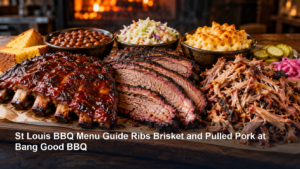
A wood-fired barbecue platter with ribs, brisket, pulled pork, and traditional sides
The short answer
Choosing among ribs, brisket, and pulled pork starts with the experience you want: ribs are a hands-on cut with bone and bark, brisket is sliced beef with a rich smoke profile, and pulled pork is tender shredded pork that works well in sandwiches or plates. Cooking time, seasoning, portion, sauce, and sides vary by restaurant, so a menu description and staff member can answer questions about the current preparation. Bang Good BBQ’s site identifies the restaurant as Sharpshooters Pit and Grill in St. Louis and highlights barbecue menu items including ribs, brisket, smoked turkey, and chicken wings. This guide explains the differences without assuming that every pit or menu uses the same recipe. Check current offerings, prices, availability, and dietary details directly with the restaurant before ordering.
What makes ribs distinct
Ribs are served on the bone, so the meal often involves more hands-on eating than sliced or pulled meat. St. Louis-style spare ribs are trimmed differently from baby back ribs, but restaurant menus may use a house description that does not specify the exact cut. Ask which rib style is currently available, whether the sauce is applied during cooking or served on the side, and how the portion is measured.
A useful way to evaluate what makes ribs distinct is to connect it to the decision the reader is trying to make about St. Louis barbecue menu choices, smoked meats, sides, and ordering questions. For diners choosing a barbecue meal for lunch, dinner, or a shared table, broad labels are less helpful than the relevant facts: what happened, when it happened, what records exist, and which conditions could change the answer. Organizing those facts helps the responsible professional explain what is confirmed, what still needs checking, and which next step fits the situation.
What to expect from brisket
Brisket comes from the chest of the animal and is typically cooked slowly to soften connective tissue. A slice can include lean flat or fattier point meat, and a restaurant may offer a mix. Smoke, seasoning, bark, and tenderness vary with cooking method. If you prefer leaner or richer slices, ask whether the kitchen can accommodate that preference and what the current serving includes.
The setting matters when considering what to expect from brisket. St. Louis BBQ cuts, menu descriptions, service, group ordering, and food-allergy questions Those details can change timing, scope, eligibility, or how a result should be interpreted. A reader should distinguish what is generally true from what applies to their own circumstances. Sharing the background early gives the provider a chance to identify missing information, explain limits, and avoid drawing conclusions from an incomplete record.
How pulled pork differs from the other cuts
Pulled pork is cooked until the meat can be separated into strands, commonly from the shoulder. Its texture makes it a natural choice for sandwiches and plates with slaw or sauce, although preparation varies. Some recipes mix sauce into the meat while others serve it separately. Ask about the cut, heat level, toppings, and whether bread or sides are included with the order.
Before choosing an approach, compare the expected benefit with the practical requirements. In this case, how pulled pork differs from the other cuts is connected to St. Louis barbecue menu choices, smoked meats, sides, and ordering questions, but the right route may depend on available evidence, access, cost, timing, and the reader’s priorities. Asking which factors actually change the decision makes a consultation more useful than trying to solve every possible issue at once.
Choosing a plate or sandwich
A plate typically combines a meat portion with sides, while a sandwich centers the meat between bread and may include toppings. The best fit depends on appetite, price, and whether you want to share. Check the current menu for serving sizes and inclusions rather than assuming that “plate” means the same thing everywhere. If your group is splitting meat, ask whether the restaurant offers combination options.
A written record can make follow-up more accurate. Note the dates, instructions, contacts, estimates, test results, approvals, or changes that relate to choosing a plate or sandwich. For diners choosing a barbecue meal for lunch, dinner, or a shared table, that record helps separate a new development from an earlier condition and gives the provider something concrete to review. Keep private information secure and share it only through an appropriate channel.
Balancing smoke, sauce, and seasoning
Smoke flavor, rub, sauce sweetness, acidity, and heat are separate parts of a barbecue profile. A sauce can complement a smoked cut without defining how the meat was cooked. If you want to taste the meat first, ask for sauce on the side when available. Guests sensitive to spice should ask about rub ingredients and heat, since menu labels are not standardized.
Terms that sound straightforward can cover different situations. When the discussion turns to balancing smoke, sauce, and seasoning, ask what the word means in this specific setting, what is included, and what falls outside the scope. The answer matters because St. Louis barbecue menu choices, smoked meats, sides, and ordering questions may involve separate stages or decision-makers. Clear definitions reduce mismatched expectations and make written instructions or estimates easier to compare.
Sides that round out a barbecue meal
Classic sides can add acidity, starch, crunch, or sweetness to a rich smoked meat plate. Coleslaw, baked beans, macaroni and cheese, potato salad, and corn are common barbecue accompaniments, but the current Bang Good BBQ menu should be checked for what is actually offered. Ask whether sides are sold separately, whether sizes are individual or shareable, and how they are prepared.
Timing can affect the choices available. A routine question about sides that round out a barbecue meal may allow time to gather records and compare options, while a deadline, worsening symptom, active leak, or scheduled launch can require a faster response. Tell the provider what dates or changes matter. The provider can then explain which timing is flexible and which part should be addressed promptly.
Ordering for different appetites
A solo diner may prefer one sandwich or a plate with a single meat, while a group can compare several cuts and sides. When ordering for a table, confirm the number of people, portion sizes, and whether the restaurant can package meats separately. Avoid over-ordering based on a generic serving estimate; appetite, sides, and leftovers differ from one group to another.
An online explanation cannot inspect the individual facts behind ordering for different appetites. It can help a reader recognize the right questions, but it cannot verify documents, equipment, symptoms, code, or site conditions. The most reliable next conversation identifies St. Louis barbecue menu choices, smoked meats, sides, and ordering questions, shares the relevant background, and asks who is qualified to interpret it. That boundary protects readers from treating a general description as a personal answer.
Food allergies and dietary preferences
Barbecue sauces and rubs can contain ingredients such as mustard, soy, wheat, dairy, or other allergens. Shared grills and kitchen surfaces may create cross-contact. Ask staff about ingredients and preparation, and describe the allergy clearly. A restaurant can explain its process but may not be able to guarantee an allergen-free meal. Vegetarian guests should ask about side ingredients and shared equipment.
Different options can be reasonable for different reasons. Ask what alternatives were considered, what tradeoffs each one brings, and what information would change the recommendation. For food allergies and dietary preferences, this comparison should account for Menu items, ingredients, prices, and preparation can change; confirm directly with the restaurant, especially for allergies or large orders. A clear explanation does not require the reader to make an immediate choice; it gives them enough context to understand the consequences and decide what follow-up is needed.
Takeout, timing, and freshness
Smoked meats are prepared in batches, and popular cuts can sell through. Before traveling, verify hours, current menu, and availability. For takeout, ask how the restaurant packages meat and sauce, whether sides are hot or cold, and how long food can safely be held before serving. Follow food-safety guidance for prompt refrigeration of leftovers.
Local details can influence the practical process even when the underlying principles are similar. In St. Louis, Missouri, the reader may need to confirm service coverage, appointment location, court or filing venue, parking and access, or the local professional responsible for the work. Verify those details directly with Sharpshooters Pit and Grill. Accurate local information helps people reach the correct office or service without assuming that every location follows the same process.
Ordering for a group or event
A larger order benefits from clear headcounts, pickup time, dietary needs, and a planned mix of cuts. Bang Good BBQ lists events and catering information online, but menus, minimums, lead times, and availability should be confirmed directly. For a group meal, label dishes, separate sauces where possible, and include serving utensils. This makes it easier for guests to choose without confusing portions or allergens.
A good handoff identifies who owns the next action. After reviewing ordering for a group or event, clarify who will provide records, approve a change, interpret a result, schedule the work, or contact another professional. For diners choosing a barbecue meal for lunch, dinner, or a shared table, naming that responsibility reduces delays and duplicated effort. If the first plan changes, record why it changed and what new information led to the update.
A simple way to compare the meats
Choose ribs for bone-in eating and a classic barbecue experience, brisket for sliced beef with a pronounced smoke and bark, and pulled pork for a tender shredded option that works particularly well in sandwiches. These are general distinctions, not guarantees about a specific plate. The pit’s preparation and the day’s menu matter, so ask about the current cut and portion.
The limits of a recommendation are as important as its benefits. The answer may depend on Menu items, ingredients, prices, and preparation can change; confirm directly with the restaurant, especially for allergies or large orders. Ask what would make the proposed approach unsuitable, what warning signs require a different response, and when the issue should be reviewed again. This keeps the discussion realistic and gives readers a way to recognize when new information deserves attention rather than relying on a plan that no longer fits.
Visiting Bang Good BBQ in St Louis
Bang Good BBQ’s website presents the business as Sharpshooters Pit and Grill and lists a St. Louis menu with barbecue items. Check the official menu or call 314-353-4745 for current hours, availability, prices, takeout, or group arrangements. The menu can change, and a web page may not reflect a sold-out item or limited-time offer.
A useful way to evaluate visiting bang good bbq in st louis is to connect it to the decision the reader is trying to make about St. Louis barbecue menu choices, smoked meats, sides, and ordering questions. For diners choosing a barbecue meal for lunch, dinner, or a shared table, broad labels are less helpful than the relevant facts: what happened, when it happened, what records exist, and which conditions could change the answer. Organizing those facts helps the responsible professional explain what is confirmed, what still needs checking, and which next step fits the situation.
A practical example for planning the service
Imagine a customer in St. Louis, Missouri planning around St. Louis barbecue menu choices, smoked meats, sides, and ordering questions. The customer gathers the facts that affect the request, explains the desired result, and asks the provider to confirm scope, timing, access, and cost before work begins. If an unexpected condition appears, the provider explains what changed and whether another trade, service, or decision-maker should be involved. Written details make it easier to coordinate the next step and avoid relying on assumptions.
This example is hypothetical and does not describe a particular customer or promise a result. It shows why the service conversation should connect the visible request to the conditions behind it. A clear estimate or plan should identify what is included, what is excluded, and which choices depend on an inspection or current availability. Readers can use the questions in this article to prepare, then rely on the responsible professional or business for a case-specific answer. The right scope depends on the actual circumstances.
Before confirming a date, verify contact details, the location, service duration, access requirements, payment terms, and any preparation or cancellation rules. Keep the written estimate or booking information available and tell the provider if the situation changes. If the work requires an inspection or depends on stock, weather, staffing, or site access, confirm how those factors affect the plan. A clear agreement helps both sides understand responsibilities and gives the customer a reliable way to ask questions during the process.
Frequently asked questions
What is the difference between ribs, brisket, and pulled pork?
Ribs are bone-in pork, brisket is smoked beef that is served sliced, and pulled pork is tender shredded pork, usually from the shoulder. Seasoning, texture, portion size, and sauce vary by restaurant.
What is the best BBQ meat for a first-time guest?
Choose based on the experience you prefer: ribs for a bone-in plate, brisket for smoked beef slices, or pulled pork for a sandwich-friendly option. Ask staff what is currently available and how each meat is served.
Does Bang Good BBQ serve brisket and ribs in St Louis?
The restaurant’s official site identifies brisket and ribs among its barbecue offerings. Check the current menu or call 314-353-4745 to confirm daily availability and prices.
Are sauces included with barbecue plates?
Sauce policies vary by dish and restaurant. Ask whether sauce is mixed into the meat, applied during cooking, or served separately. You can request a preference, but availability depends on the current menu.
What sides go well with smoked meat?
Sides that add crunch, acidity, or a mild starch can balance rich smoked meat. Check the restaurant’s current menu for available options, ingredients, portion sizes, and whether sides come with a plate.
Can Bang Good BBQ accommodate food allergies?
Ask staff about ingredients and cross-contact before ordering. Sauces, rubs, and shared equipment may contain or contact allergens. The restaurant can explain its process, but guests with severe allergies should confirm whether the kitchen can safely accommodate them.
Should I order brisket lean or fatty?
Brisket can include leaner and fattier portions, and a restaurant’s serving may combine them. Ask what the kitchen can provide that day. Fat content affects texture and richness, but preference is personal.
Can I order barbecue for a group in St Louis?
Bang Good BBQ lists event and catering information. Contact the restaurant with your date, headcount, pickup or service needs, and dietary questions to confirm current menus, lead times, and availability.
How do I keep BBQ takeout fresh?
Follow the restaurant’s handling advice and general food-safety guidance. Refrigerate perishable leftovers promptly, use clean utensils, and reheat food safely. Ask about packaging and pickup timing for a large order.
What number should I call to check the current menu?
Bang Good BBQ lists 314-353-4745. Confirm hours, current items, prices, and catering details directly with the restaurant before placing a time-sensitive order.