
- Key Takeaways
- The STL BBQ Identity
- Beyond The Ribs
- The Sauce Secret
- Smoke & Soul
- Neighborhood Joints
- A Local’s Guide
- Conclusion
- Frequently Asked Questions
- What makes St. Louis style BBQ unique?
- Where can I find the best St. Louis style BBQ near me?
- What is St. Louis style BBQ sauce made of?
- Are there good vegetarian options at St. Louis BBQ joints?
- What are “St. Louis cut” ribs?
- Can I get St. Louis BBQ for takeout or delivery?
- How spicy is St. Louis style BBQ?
Key Takeaways
- St. Louis-style BBQ takes its cues from signature cuts like spare ribs and pork steaks, a sweet and tangy tomato-based sauce, and a penchant for slow smoking that delivers intense flavor.
- From unique cuts like burnt ends and snoots to smoking woods like hickory and oak, the meats available help form the authentic St. Louis style BBQ flavor found at neighborhood BBQ joints.
- House-made sauces lie at the heart of each restaurant’s distinction, with many joints featuring variations that temper sweet and tangy with regionally sourced ingredients.
- Traditional and creative sides like baked beans, cole slaw, mac and cheese, and BBQ nachos complement a BBQ meal.
- The ambiance at St. Louis BBQ joints is usually warm and inviting, with a casual, family-friendly vibe, complete with rustic décor, live music, and outdoor seating that complements the dining experience.
- To experience top-notch St. Louis BBQ, explore neighborhood staples, sample the specials, ask the waitstaff what’s popular, and order a variety of meats and sides for an authentic culinary adventure.
Slow-cooked pork ribs, tangy tomato-based sauce, and smoky aroma at local gems like SharpShooters Pit and Grill
St. Louis BBQ is known for its trimmed spare ribs, sweet rubs, and iconic sides like baked beans and slaw.
Both sides of the river, St. Louis city and county, have their fair share of places serving them up with great service and a relaxed atmosphere.
More favorites below.
The STL BBQ Identity
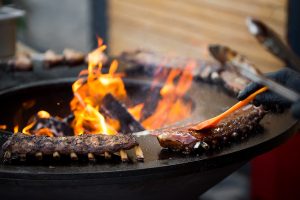
STL BBQ is a combination of tradition, innovation, and pride. What makes the best St. Louis style BBQ so special is its commitment to unique cuts, sweet tomato-based sauces, slow smoking, and an array of sides. Family-run BBQ joints and smokehouses define the city’s BBQ culture, combining southern influence with local comfort food and a warm, nostalgic atmosphere. From the meat and sauce to the smoke, sides, and atmosphere, this is what makes STL BBQ so unique!
1. The Cut
STL BBQ features spare ribs, trimmed breastbone and cartilage removed for a flat, uniform, meaty slab. Pork steaks, cut from the shoulder, are another regional favorite, typically grilled or smoked and finished with a thick coating of sauce. Beef brisket is everywhere, smoked low and slow until it falls apart and occasionally pops up in burnt ends, which have emerged as a local staple at many spots.
Others emphasize turkey or even smoked sausage, illustrating the city’s diversity. Specialties such as burnt ends and breakfast BBQ sandwiches at farmers’ markets provide fans much to sample. The cut of meat influences aroma and consistency, creating an exclusive dining experience each time.
2. The Sauce
As a classic St. Louis BBQ sauce, it’s sweet and tangy and tomato-based, typically with brown sugar, vinegar, and a mild kick from black pepper or spices. Each restaurant has its own twist, from sauce that’s extra sweet to spicy or even mustard-based. House-made sauces are a restaurant’s identity, with some using family recipes from generations ago.
These sauces are made to pair with the smokiness of ribs, brisket, and pork steaks, balancing sweet and tangy with the meat’s richness.
3. The Smoke
Hickory wood rules in STL smoking, while oak and fruitwoods such as apple and cherry are prevalent. The slow-smoke process at low temperatures, frequently 225°F to 250°F, is typical for these cuts, rendering fat and imparting deep smoke flavor. This gradual process renders the meat tender and juicy with its signature pink smoke ring.
Real smokehouses obsess over fire control, fuel quality, and timing, ensuring every batch turns out perfect. Steady temperature is the secret to not having dry or tough meat, and the proper wood mix infuses the BBQ with richness.
4. The Sides
Side dishes round out the BBQ experience. Signature sides such as cole slaw, baked beans, potato salad, mac and cheese, and fries are essential. Several locations offer comfort food flair with fried pickles, Brussels sprouts with pork belly, and BBQ nachos.
Sides like these are anything but filler—they’re part of what keeps guests returning. Local BBQ joints get creative, at times trading out the standard sides for seasonal, locally grown vegetables or family recipes.
5. The Vibe
A lot of St. Louis BBQ joints have a weekend cookout or old-school smokehouse vibe with rustic wood paneling, picnic tables, and walls filled with faded photographs. Family-friendly and casual, these joints often feature live music or events, furthering the sense of community.
They have outdoor seating during the summer months, allowing visitors to bask in the glory of open air BBQ. The vibe is relaxed, emphasizing comfort and community, with a nod to both Southern heritage and hometown pride.
Beyond The Ribs
St. Louis BBQ is about more than just the famous ribs. Local pitmasters have always been pushing the limits, infusing the best St. Louis style BBQ traditions with innovative new flavor profiles. The menu frequently showcases a variety of meats and sides that honor the city’s rich history and taste for fearless flavor.
Exploring these hidden gems provides a more comprehensive glimpse into St. Louis’ barbecue scene, encouraging eaters to step past the typical platter and taste the city’s authentic innovation.
Pork Steaks
Pork steaks are a backyard cookout and BBQ restaurant menu staple throughout St. Louis. Sliced from the pork shoulder, these steaks are marbled and flavorful. Cooks usually grill or smoke ‘em low and slow, then finish ‘em off with a tangy tomato-based sauce for that perfect smoky sweetness.
The magic of the process is that it creates meat so tender that it pulls apart with the slightest pressure. Pork steaks are staples at local festivals, family reunions and citywide BBQ contests, proving how ingrained the tradition is in the region’s culture.
Typical sides are creamy coleslaw, baked beans or even fried fire-and-ice pickles—pickles that provide a sweet, spicy crunch to complement the indulgent pork. Some restaurants will even serve pork steak sandwiches at popup markets for breakfast, making it a local delicacy.
Snoots
Snoots, or pig snouts, are a St. Louis BBQ delicacy. The process begins by cleaning, seasoning and smoking the snouts until they are crisp on the outside but wonderfully chewy inside. This technique extracts a bold, smoky flavor and produces a texture that’s between cracklings and chicharrón.
Snoots have been around the local food scene for some time, gracing family BBQ shacks and gatherings. Their cultural significance lies in a tradition of making use of every part of the animal, which speaks both to thrift and to culinary chops.
Adventurous eaters, we dare you to try snoots one time! While snoots are the big star of some restaurants, they serve things like tripe, turkey ribs, or even smoked shrimp.
Tri-Tip
Tri-tip, which is a triangle-shaped portion of the bottom sirloin, is enjoying a bit of a renaissance on St. Louis barbecue menus. Celebrated for its marbling, tri-tip provides both tenderness and bold beef flavor, popular amongst those looking for something beyond brisket or ribs.
Pitmasters spice it with dry rubs or marinades before smoking or grilling, frequently slicing it paper-thin to serve on sandwiches or as an entree. A few BBQ joints serve tri-tip as burnt ends or with sides such as blackened chicken salad or the brisket Philly.
For those ready to step outside the ribs, keep your eye out for tri-tip specials or pork belly burnt ends at BBQ joints, typically designated for specific days of the week. Local joints might be serving up turkey legs on Fridays as well, sweet non-traditional love!
The Sauce Secret
That sauce secret is at the core of the Best St. Louis style BBQ, any way you slice it. This beloved St. Louis, Illinois, barbecue sauce is renowned for its sweetness and tang. It’s a key ingredient to special St. Louis-style barbecue. It’s the secret sauce of our signature seasoning that has everyone from locals to visitors raving.
Below is a table showing the main components and how they work together to create the well-known flavor profile:
|
Ingredient |
Role in Flavor Profile |
Local Significance |
|---|---|---|
|
Natural Tomato Concentrate |
Brings umami and rich base |
Sourced from Midwest tomatoes |
|
Brown Sugar |
Adds sweetness and depth |
Reflects local taste preferences |
|
Cider Vinegar |
Balances with sharp acidity |
Common in Midwest pantries |
|
Molasses |
Deepens the sweetness, adds body |
Traditional sweetener in region |
|
Tomato Paste |
Intensifies tomato flavor |
Used in local homemade sauces |
|
Granulated Garlic |
Boosts savory notes |
Grown in nearby rural areas |
|
Natural Flavors, Salt |
Enhances overall taste |
Custom blends by local makers |
|
Spices |
Layers of complexity, subtle heat |
Secret blends unique to St. Louis |
For the perfect St. Louis BBQ sauce, the secret is sweet and tangy. Brown sugar and molasses join forces with the sauce to lend a warm, sweet finish. Cider vinegar cuts through, providing a bright tang that keeps the sauce from being too heavy.
This equilibrium is not only about flavor, but about how the sauce complements smoked meats. It adheres to pork ribs, chicken thighs, and shoulders, imparting every bite with a combination of sweet and tart that has become the benchmark for Best St. Louis style BBQ.
Local ingredients have a lot to do with what makes these sauces special. Most of the sauce makers in St. Louis use Midwestern tomatoes and some even get their garlic from local farms. This emphasis on local ingredients imparts a freshness to the sauce and unites it with the region’s agricultural past.
Small batch makers and restaurants like Secret Sauce, which has received perfect scores from eaters, tend to do their own twist on the traditional by either spicing up the mix or using different vinegars. This maintains the tradition but allows for your own flair.
A lot of people are interested in making their own at home – The Sauce Secret. Experimenting with different combinations of tomato paste, brown sugar and cider vinegar is a great beginning. Swapping local honey for the molasses or adding some smoked paprika can alter the taste in subtle but important ways.
Bottled versions of the sauce secret are sold online and in stores, so it’s easy to sample before plunging into DIY experiments. Inspired by local favorites, home cooks can mold a sauce to fit their own palate but still honor the origins of the Best St. Louis style BBQ.
Smoke & Soul
Barbecue in St. Louis isn’t just a meal to eat, it’s part of the DNA of the city, almost a social event. From backyard cookouts to neighborhood events, BBQ serves as a cornerstone where loved ones come together, enjoy food and create great memories.
My favorite St. Louis style BBQ joints – Delmar, Hampton, St. Charles, Ballpark Village, Ellisville, SoCo, Kirkwood – are authentic community hangouts. Traditions blossom from these local joints, with events and celebrations frequently revolving around the pit. Our ribs, brisket and sausage don’t just fill plates; they bring people together to build community, create bonds and spark dialogue between people of all walks.
BBQ is about more than flavor; it’s about the bonds and memories that each feast creates.
The Wood
Oak, hickory, cherry, and pecan are often used by St. Louis pitmasters. Each has its own smoke profile and taste. Oak offers a gentle, consistent smoke that complements brisket, while hickory imparts a more robust taste that goes with pork ribs.
Cherry adds a sweet note and color to chicken or turkey. Pecan is lighter and is wonderful for delicate meats. Wood selection is one of the keys to smoking. It’s not only the heat. The wood’s aroma and burn rate modify how the meat cooks and flavors.
At award-winning BBQ joints in St. Louis, meticulous wood selection crafts the taste that locals hunger for. For the home cook, variation through wood experimentation can be a gateway to new flavors and cultivating a signature style.
The Pit
The pit is the soul of any BBQ joint. In St. Louis, there are offset smokers, barrel pits, and custom brick pits. Each design influences how smoke and heat circulate around the meat. Offset smokers, common in many local joints, keep the fire apart from the meat, allowing indirect heat to accomplish slow and even cooking.
It’s just that pit design matters. A sturdily constructed pit maintains consistent heat, which is the key to juicy brisket or fall-off-the-bone ribs. Some of the best St. Louis style BBQ joints have pits hand built by master craftsmen.
Their craft influences the end result just as much as the chef’s culinary instructions.
The Method
Slow-cooking is certainly a hallmark of St. Louis BBQ. Low heat and long hours tenderize hard cuts, transforming them into tender, delicious morsels. Chefs begin early, frequently dry rubbing meat before smoking for hours.
You need patience because anything done in haste is a taste and texture sacrifice. A lot of local chefs use a mix of dry rubs and sauces, depending on the cut of meat. Brisket is frequently oak-smoked and dry-rubbed, and ribs are beloved by locals and visitors alike.
Experimenting with these techniques in your own kitchen is always fun. With patience and the proper technique, BBQ that unites the masses is in everyone’s reach.
Neighborhood Joints
Neighborhood joints are the meat and potatoes of the Best St. Louis style BBQ scene. These neighborhood joints keep it simple with great smoke, quality meats, and authentic St. Louis flavors. Every joint has a way it distinguishes itself in how it makes old-school BBQ come alive, from the cut of the pork steak to the sauces that adorn it.
It’s the charm of them all having their own twist on the traditional menu while always keeping the spirit of STL BBQ alive. A few locations embrace the smokehouse staples, including racks of ribs, succulent wings, and smoked brisket, but throw in inventive bites like tacos and BBQ sammies. These plates deliver a blend of old and new with a classic neighborhood jolt.
It’s that support for these neighborhood joints that keeps the BBQ authentic to the city. Unlike bigger chains, neighborhood joints operate on lean teams and keep recipes in the family or close circle. When you eat here, you’re helping keep the craft alive and the history.
For example, it’s not uncommon to discover a joint that began life as a food truck or trailer, such as a famed St. Peters establishment that collected hundreds of competition wins before hanging up a brick-and-mortar shingle. These places have years of practice and pride. It comes through in the flavor and the attention delivered with every plate.
Not only do you find gems when you explore neighborhood joints, many are off the main drags or nestled right into a busy neighborhood. Some joints will give you a laid back “nothing fancy” environment with couple tables, wood smoke and a constant stream of regulars.
Others opt for a party with music and outdoor seating or even an attention-grabbing, glossy tree trunk slab bar where you can hang and watch the pitmasters in action. You’ll discover neighborhood in the nosh with neighbors dropping in after work or on weekends, swapping tales over pulled pork or burnt ends.
Menus tend to represent what the locals crave. St. Louis classic pork steak—a thick 20-ounce cut, smoked, grilled and sauced—is a staple. Burnt ends have a cult following, but rib tips, pork loin and wings are other faves.
Some joints get crazy, mixing up mac and cheese with chili for a creamy, meaty chili mac, or folding BBQ into tacos for a street-food flair. In the Grove, one spot mixes KC-style with St. Louis smokehouse roots for a fresh spin on the classic. Each plate reflects a slice of the neighborhood and the folks who create it.
A Local’s Guide
- A Local’s Guide to the Best St. Louis style BBQ – based on local knowledge of the area’s hidden spots and secret traditions. St. Louis BBQ features saucy, meaty cuts, creative sides, and a laid-back vibe with many hidden gems tucked away in neighborhoods and backstreets! Knowing how to order, what to sample, and when to go can make a good meal memorable.
Order Right
- Go with the house specialties: St. Louis-style ribs, rib tips, or burnt ends because these are the best at demonstrating the pitmaster’s talent. Inquire about specialty items or what’s smoked fresh that day.
- Balance means mixing meats and sides on your plate. For example, you can have saucy rib tips with pulled pork and complement them with sides like tangy slaw or creamy mac and cheese.
- Think about portion sizes before ordering, particularly if you’re in a group. St. Louis plates tend to be pretty big, so sharing means you can taste more without overeating.
- Go for some daily specials and let staff recommend you some based on your palate. Other locals geek out about mustard-based Southern Style Original sauces or specialties like smoked pork loin.
Locals eat family-style. They order several platters to pass around. That’s why sampling a variety of meats, sides, and sauces results in a more fulfilling experience. Be sure to not miss house-made pickles or specialty sausages if on offer.
Side Hustle
Sides aren’t just fluff; they’re essential to the BBQ experience. Fried corn on the cob, baked beans, and collard greens are classics. A few local joints have creative sides that shine, like jalapeño-cheese grits or loaded potato salad.
- Fried corn on the cob
- Mac and cheese
- Tangy coleslaw
- Seasoned fries
- Baked beans
- Collard greens
Sample whatever obscure sides appeal to you, as these are frequently what distinguish one place from another. Awesome sides take a plain old BBQ meal to a feast and leave you wanting to sample something new each time you stop over.
Drink Pairings
A perfect drink makes St. Louis BBQ sizzle! Local craft lagers, wheat ales, or a bourbon cocktail pair well with rich, smoky meats. Non-alcoholic sweet tea, homemade lemonade, or craft sodas complement spicy or tangy sauces.
Seek out local brews for limited-release beers that complement BBQ’s bold flavors. There are a few barbecue joints with outdoor seating or even sandbars, which are ideal for kicking back with a cold one and enjoying the Friday night live music.
See if your server has any house specials or what locals drink with their ribs.
Conclusion
St. Louis style BBQ hits differently. Smokie ribs, pork steaks and tangy sauce, that’s how people here fill up a plate. Every spot offers bold flavor with hickory wood, slow heat and homegrown pride. Local joints around St. Louis use authentic cuts and keep things laid back. Sauce drips off your fingers and the meat just falls off the bone. Sides like slaw and toasted ravioli just top off the feast. No fuss. No bells and whistles. Simply delicious food with a backyard atmosphere. Want to hear the best? Walk into a bustling joint and follow the scent of smoke. Venture somewhere new, trade tales with locals, and discover your go-to. BBQ here is more than just food. It bonds people.
Frequently Asked Questions
What makes St. Louis style BBQ unique?
St. Louis style BBQ pork ribs cut into neat rectangles, tangy tomato-based sauce, and slow smoking over hardwood. It’s a place of bold flavors and tender meat.
Where can I find the best St. Louis style BBQ near me?
Try local legends Sharpshooters Pit and Grill These joints are locals’ favorites for classic St. Louis style BBQ.
What is St. Louis style BBQ sauce made of?
St. Louis BBQ sauce is typically tomato-based, sweet, and tangy. It usually consists of ketchup, brown sugar, vinegar, and spices. It is less spicy and sweeter than Kansas City style.
Are there good vegetarian options at St. Louis BBQ joints?
Find the best St. Louis style BBQ near me. Some offer smoked jackfruit or veggie burgers.
What are “St. Louis cut” ribs?
St. Louis ribs, known as St. Louis cut ribs, are spare ribs that have been trimmed into a rectangular shape. This cut removes the brisket bone and cartilage for uniform cooking and easier eating.
Can I get St. Louis BBQ for takeout or delivery?
Yes, the majority of St. Louis BBQ restaurants provide takeout and delivery. Many of them have online ordering and curbside pickup as well.
How spicy is St. Louis style BBQ?
St. Louis style BBQ is generally mild and sweet. The sauce emphasizes tang and sweetness, making it ideal for those who crave bold flavor but not a lot of heat.